
Free Instant Win Competitions UK: How the Free Route Works
You spot an instant-win competition promising a same-day prize reveal, tap through, and then spot a line buried in the terms: 'no purchase necessary, alternative free entry route available.' Most people scroll straight past it. We didn't - we read the small print on a run of UK instant-win sites, worked out what a compliant free entry actually has to look like, and traced what happens to it once it lands with the organiser.
The free route is the postal or online alternative that every genuine UK prize competition must offer so that entering isn't effectively paying to gamble. It exists because of gambling law, not goodwill, and it sits alongside the paid entry as an equal way into the same prize pool. This piece walks through the mechanics: why it's required, how to use it properly, what slows it down, and where it can quietly go wrong.
If you're new to this corner of UK competitions, it's worth browsing our full list of live competitions first, just to see how often the free route actually appears in practice - it's more common than most newcomers expect, once you know where to look in the terms.
What Is the Free Route in a UK Instant Win Competition?
The free route is a no-cost way to enter that gives you the same shot at the prize as someone who paid. It's usually a postal entry - a letter with your answer to a skill question, your name and address, sent to a freepost or standard address the organiser publishes in their terms. Some sites also run a free online form as an alternative to postal.
Instant-win games specifically dish out prizes the moment you play, rather than at a single draw date, so the free route has to feed into that same instant mechanism, not a separate consolation prize. If it doesn't, that's a sign the competition isn't structured the way UK law expects.
Picture a competition offering a car as the headline instant-win prize, with paid entries at £1.50 each and a set number of instant-win 'tickets' loaded into a virtual pool. A compliant free route means postal entrants get slotted into that exact same pool of tickets, not a smaller side pot reserved just for them. In practice, that usually means the organiser assigns a ticket number to each valid postal entry using the same allocation logic as a paid one, just processed by hand rather than by a payment gateway.
Free Entry vs Free-to-Play: Not the Same Thing
These two get muddled constantly. Free-to-play instant wins - the kind you'll find in our roundup of the best instant win games in the UK - cost nothing at all, for anyone, every time. The free route is different: it's the no-cost alternative sitting alongside a paid instant-win competition, there specifically so people who don't want to pay still have a genuine chance. One is a whole competition type; the other is a legal safety valve built into a paid one.
A useful way to keep the two apart: if you'd still describe the competition as 'free' even to someone who's never sent a letter in their life, you're looking at free-to-play. If the word 'free' only appears once you've dug into the terms and conditions, you're looking at the free entry route sitting inside a paid competition. Both are legitimate, but they answer completely different questions about cost.
Why Does UK Law Require a Free Way to Enter?
Without a free route, most 'pay to enter, win instantly' competitions would legally be lotteries, which are heavily restricted outside the National Lottery and licensed operators. The Gambling Act 2005 draws a sharp line between a lottery (pure chance, pay to play) and a prize competition (skill-based, with a genuinely free way in). Sites that want to charge an entry fee for a chance-based instant win have to build in that free alternative to sit on the right side of that line.
The logic behind this is worth spelling out, because it explains why the free route can't just be a token gesture. A lottery, in the legal sense, is any arrangement where people pay to try their luck and winners are picked by chance alone. Charge for that without a free alternative, and you've built an unlicensed lottery, which is a serious problem for the operator, not just a technicality. Adding a proper free route and a skill element is what allows a site to legally charge for entry into what is, functionally, still a game of chance for most players.
The Skill Question Test
That's why almost every paid instant-win entry sits behind a multiple-choice question first - something like naming which of three cities is the capital of a country. It doesn't need to be hard. It needs to exist, and it needs to be a genuine barrier, in the sense that a wrong answer should mean you don't get an entry. If a site's 'skill question' is unmissably obvious every single time, that's worth noting, though it's not automatically a compliance failure on its own.
You'll see the same pattern whether you're entering a straightforward tech giveaway or a headline cash prize competition. Browse our tech competitions or our cash prize competitions and you'll notice the skill question sits in almost identical form on both - because it's answering the same legal requirement regardless of what the prize actually is.
What the Gambling Commission Actually Says
The Gambling Commission oversees gambling law in Great Britain and publishes guidance on the difference between a lottery and a free prize draw or skill competition. We're not solicitors, and this isn't legal advice - if you want the primary source, the Commission's own guidance and the Gambling Act 2005 text are the place to go, not a blog post.
What the Commission's guidance does make clear, in general terms, is that the free route has to be a 'genuinely equal' route to entry - not hidden, not disproportionately harder to use, and not leading to a worse prize. Organisers who get this wrong risk enforcement action, which is part of why most established UK competition sites are careful to keep their free entry wording consistent and clearly signposted, rather than buried in a way that only a determined reader would find.
How Do You Enter an Instant Win Competition for Free?
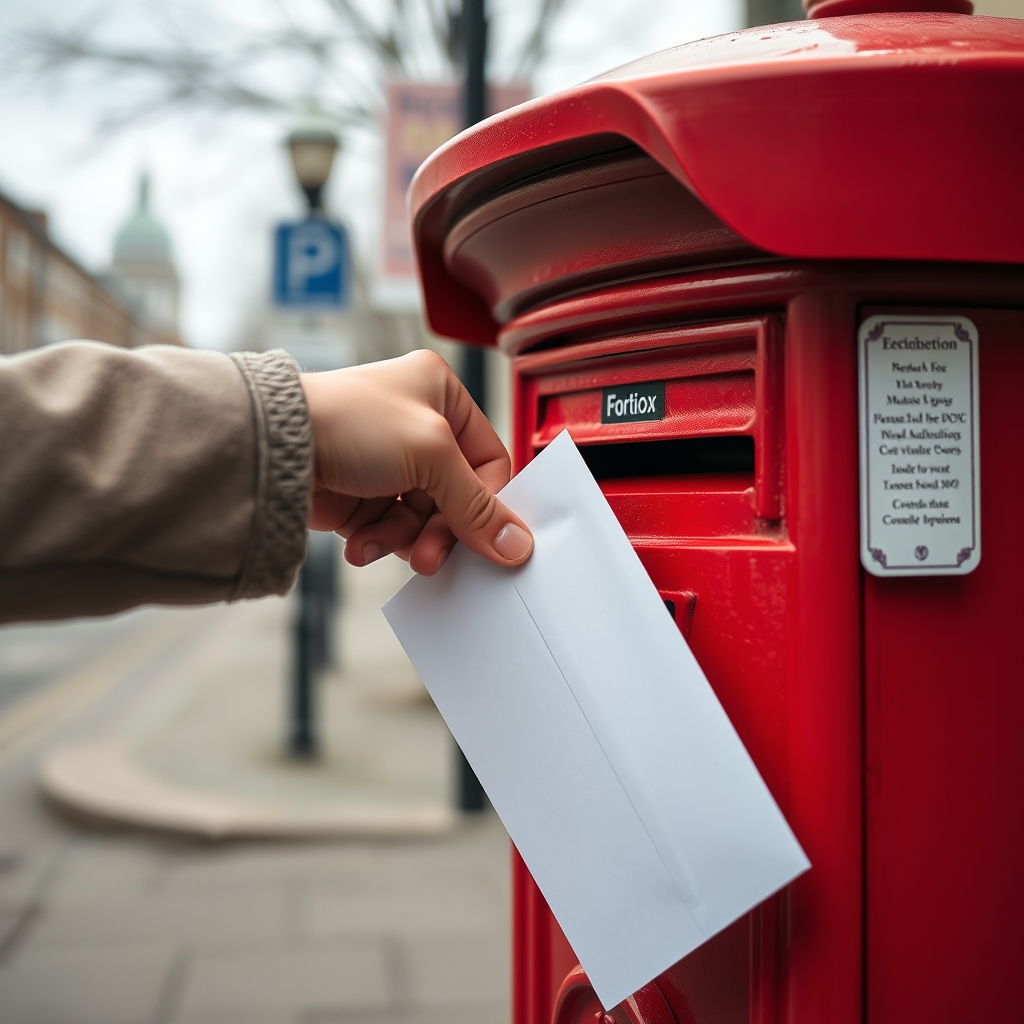
You write to the address in the terms and conditions, answer the same skill question as paying entrants, and post it before the stated closing date. That's the whole mechanism. No card details, no account top-up, just a letter.
The terms will tell you exactly what to include. Most ask for: your full name, home address, a daytime contact number or email, the competition or draw reference if there are several running, and your answer to the skill question. Some also want you to state which specific prize or instant-win game you're entering for, especially on sites running several competitions at once.
A worked example helps here. Say a site is running an instant-win game for a games console, with a skill question asking which of three consoles was released first. A valid free entry might read: 'Dear [Organiser], I'd like to enter the [Console Name] Instant Win competition, reference INW-2201. My answer to the skill question is: [Console X]. Name: Jane Smith. Address: 14 [Street], [Town], [Postcode]. Contact: [email protected].' Nothing fancy - just every field the terms asked for, answered clearly and completely.
What to Write on the Envelope
Get the address exactly right, down to the postcode and any 'FREEPOST' wording, since Royal Mail routes freepost items differently to standard first-class post. If the terms specify a particular subject line for postcards versus letters, or ask you to write the competition name on the outside of the envelope, do it - that's often how a busy fulfilment team sorts entries without opening every one individually. A first-class stamp is standard unless the address is genuinely freepost, in which case you don't need one at all.
It's also worth double-checking whether the terms ask for one entry per envelope or allow multiple entries in a single envelope, since some organisers explicitly forbid batching several competition entries together to save on postage. Where that's not addressed directly, the safer assumption is one envelope per entry, particularly if there's a stated per-person limit that a batched submission might otherwise appear to breach.
Do Free Postal Entries Get the Same Chance as Paid Entries?
They're supposed to, and that's the entire legal point of the free route existing - but the practical odds still depend on how many free entries the site actually receives. A compliant competition puts every valid entry, free or paid, into the same pool for the same prize, with no separate 'free tier' that only wins smaller consolation extras.
Same Pool vs Separate Pool
This is the detail worth checking in any site's terms before you send anything. Look for wording that says free and paid entries are treated identically and have an equal chance of winning. If a competition instead says free entrants go into a separate draw for a lesser prize, that's a different structure and arguably weaker as a free route - it's worth reading closely rather than assuming.
We don't have and wouldn't invent a specific win-rate figure for free versus paid entries on any site, because organisers don't publish that breakdown and nobody outside the company reliably knows it. What we can say is that the mechanism, on paper, is meant to be neutral between the two entry types. If you want reassurance beyond the terms and conditions themselves, some organisers will confirm the pool structure directly if you email and ask - a short, polite query is a reasonable thing to send before you commit a stamp and envelope.

How Do Free Entry Routes Actually Compare Across Sites?
Most UK instant-win and prize competition sites use one of a handful of standard free entry formats, and the format changes how fast and how fiddly the process feels. We compared the common approaches rather than naming a single 'best' site, since the format matters more than the brand running it.
| Free Entry Method | How It Works | Speed | What to Watch For |
|---|---|---|---|
| Postal (letter + SAE) | Write in with your answer, name and address to the published address | Days, depending on Royal Mail and any manual processing at the other end | Illegible handwriting or a missing skill-question answer gets entries binned |
| Postal (postcard only) | Same as above but on a postcard, sometimes with a stated maximum size | Similar to letter post | Postcards can go astray more easily; some organisers reject non-standard sizes |
| Free online form | A web form mirroring the paid entry, minus payment, sometimes with a captcha or limit per household | Instant submission, though the entry itself still has to be manually checked | Session limits, one-per-device rules and IP checks can block genuine repeat entrants |
| Free draw-only alternative | A separate, smaller draw offered instead of full parity with the paid pool | Varies | Not the same chance as paying; read whether it's genuinely the same pool |
Of the four, the free online form tends to feel the most modern, but it isn't automatically faster in terms of actually being entered into the draw - the submission is instant, but a human or a moderation queue still has to check it before it's added to the live pool. Postal letters and postcards are slower to arrive but, once received, often get logged in the same batch process as everything else. The one format worth genuine caution around is the last row: a free draw-only alternative that isn't the same pool as the paid entries is a weaker version of what the free route is meant to be, even if it's technically free.
Is the Free Route Too Slow for Instant Win Games?
It can feel slow next to an instant reveal, because post takes days while a paid entry gets an answer in seconds - but the timing that matters is the competition's closing date, not how quickly your letter arrives. As long as your entry is received and logged before the cut-off, it goes into the same pool.
Postal Timing vs Instant Win Cut-off Dates
Where people trip up is assuming 'instant win' means the whole competition closes instantly too. It doesn't. Most instant-win competitions run for a set window - often days or weeks - during which every entry, paid or free, is eligible, and the prize is revealed to each entrant as soon as their entry is processed rather than at one single moment for everyone. Post your free entry early in that window rather than the last posting day before closing, and you avoid the risk of Royal Mail delays pushing it past the deadline.
A practical rule of thumb: if a competition window runs for two weeks, aim to have your letter posted within the first week rather than the last few days. First-class post within the UK is generally quick, but it isn't guaranteed next-day, and postal disruption around bank holidays or bad weather can add unpredictable delays. There's no upside to cutting it fine when a stamp and a slightly earlier trip to the postbox cost you nothing extra.
What Should You Check Before You Post a Free Entry?
Check the closing date, the exact address, any per-person or per-household entry limit, and whether proof of postage is recommended, before you put a stamp on anything. These four things account for most rejected free entries we've seen discussed by competition entrants online.
Reading the Terms Without Losing the Will to Live
Terms and conditions are genuinely tedious, but the free entry clause is usually short and specific - often a single paragraph near the bottom. Skim for the words 'free entry', 'no purchase necessary' or 'alternative route' and read just that section properly rather than the whole document. If you can't find any free entry clause at all on a site charging for instant-win entries, that's a red flag worth taking seriously.
It's also worth checking whether the entry limit is per person, per household, or per postal address, since these aren't always the same thing. A 'one entry per household per competition' limit means two adults living at the same address can't both post separate free entries for the same prize, even under different names - something that catches out families who assume each person gets their own go.
What Happens After a Site Receives Your Free Entry?
A real person or a moderation process checks that your skill-question answer is correct and your details are complete, then logs your entry into the same system as paid entries before the draw or instant-win allocation runs. This is manual, or at least manually reviewed, at almost every UK operator, because postal handwriting can't be read automatically the way an online form can.
Lucky Turbo, like other sites operating this model, publishes a free postal entry route in the terms for eligible competitions, alongside the standard paid entry and our range of instant win games and free-to-enter competitions. If you've sent a valid entry and haven't had confirmation within the timeframe stated in the terms, the right move is to contact the organiser directly rather than assume it's been lost - though delays happen, and a missing acknowledgement isn't always a sign of a problem.
Behind the scenes, most operators batch postal entries by day or by week rather than processing each letter the moment it arrives, simply because that's more manageable at volume. That means your entry might sit unopened for a few days even after it's physically arrived, which is normal and not a sign it's been overlooked - it's only worth chasing once you're past the timeframe the terms actually promise for confirmation.
What Mistakes Get Free Entries Rejected?
The most common rejection reasons are a missing or wrong skill-question answer, an illegible or incomplete address, entering after the closing date, and exceeding a stated entry limit. None of these are unfair technicalities - they're the same standards a paid entry has to meet, minus the payment.
A less obvious one worth flagging: sending a free entry for the wrong competition, or for a competition that's already closed. Sites running multiple instant-win games in parallel sometimes reuse similar addresses or near-identical wording across competitions, so it's easy to post a letter intended for one game to an address that actually belongs to another. Double-checking the exact reference number or competition name against the specific terms you read is the simple fix.
Proof of Postage Matters
If a competition is popular, or the prize is significant, it's worth asking for free proof of postage at the Post Office counter. It costs nothing, takes a moment, and gives you a dated record that you sent the letter before the deadline - useful if there's ever a dispute about whether your entry arrived on time. It's a small habit that costs nothing but can save an argument later.
Keep the proof of postage slip somewhere you'll actually find it again, ideally alongside a note of which competition it relates to, since a stack of unlabelled Post Office receipts is only useful if you can match one back to the right entry months later.
Is the Free Route Worth It for Instant Wins?
Yes, if you're comfortable with the wait and the process, because it's a genuinely equal-chance way into the same prize pool at no cost - but it won't suit anyone who wants an answer in the next thirty seconds. The trade-off is time and a bit of admin against a payment.
When Spending a Small Amount Still Makes Sense
For some people, a low-cost paid entry is simply more convenient than finding a stamp and an envelope, and that's a reasonable call too - there's no obligation to use the free route just because it exists. What matters more than which route you pick is treating any spend as entertainment money you're comfortable not getting back, never as an investment or a plan for income. If a prize does land, it's also worth understanding how tax treats competition winnings; we've covered that separately in our piece on how UK tax rules apply to prize money, and HMRC's own guidance is the definitive source on anything specific to your situation. Play within your means, use the free route if it suits you, and remember that no entry method - free or paid - can guarantee a result.
Frequently Asked Questions
Do I have to pay to enter an instant win competition in the UK?
Does a free postal entry have the same chance of winning as a paid entry?
What do I need to include in a free postal entry?
Why do instant win competitions ask a skill question?
What should I do if my free entry isn't acknowledged?
Try an Instant Win
Scratch cards, spin the wheel, coin flips — find out instantly if you've won.
Browse Instant Wins